
Different Types of Sauna
Here is the breakdown of the primary types
Broadly speaking, saunas are defined by how they generate heat and manage humidity. While many people throw the word “sauna” around for any room that makes you sweat, purists know better. There is a world of difference between the traditional “dry” heat of Finland and the various humid or radiant alternatives out there.
Traditional Finnish Sauna (The Real Deal)
This is the gold standard. If it doesn’t have stones and a heater (electric or wood-burning), you’re just sitting in a cupboard.
- Heat Mechanism: The air is cranked up to proper temperatures, typically between 70°C and 100°C.
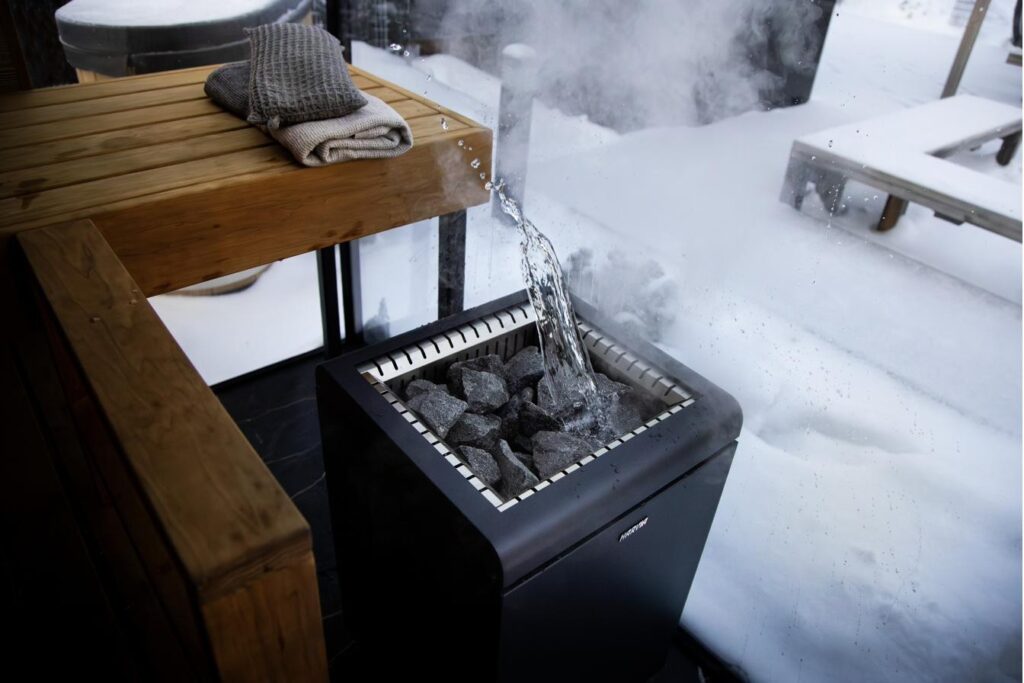
- The “Löyly”: This is the soul of the experience. You pour water over the scorching hot stones to create a burst of steam (Löyly), which momentarily spikes the humidity and the heat.
- Pro tip: If you aren’t creating Löyly, it’s just a hot room… not a sauna.
- Materials: Built almost exclusively with specialized softwoods like Nordic Spruce, Aspen, or Alder that can handle high heat and moisture without giving you a splinter where you don’t want one.
Infrared Sauna (The “Not Really a Sauna” Sauna)
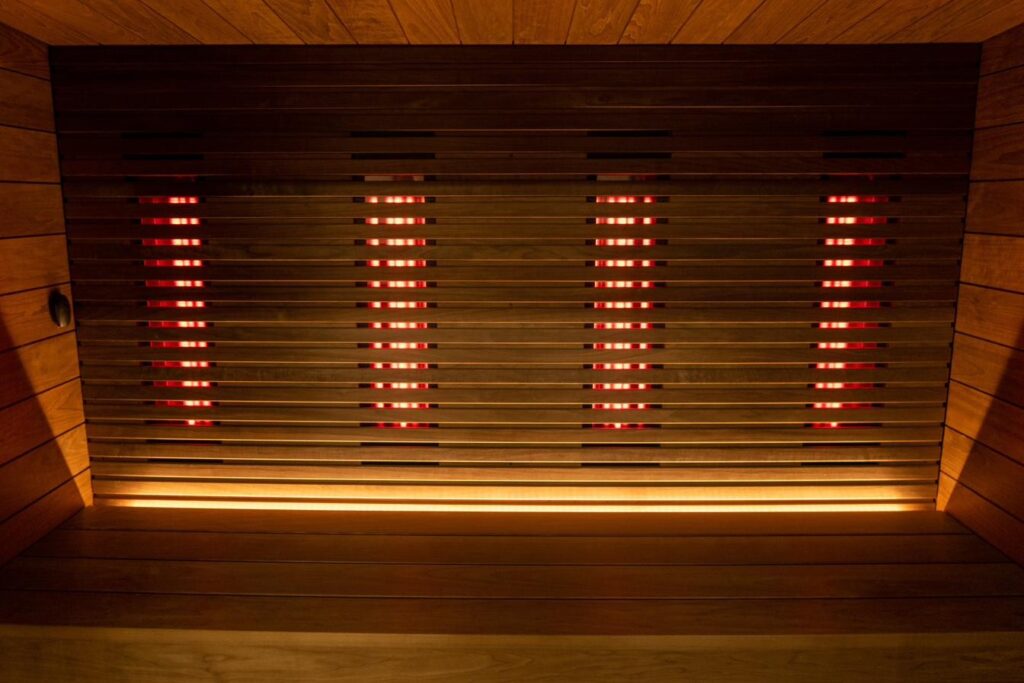
Infrared cabins don’t actually heat the air around you. Instead, they use infrared lamps to emit electromagnetic radiation that warms your body directly.
- Heat Mechanism: Temperatures are much lower, usually between 45°C and 60°C.
- The Experience: Since the air stays cooler, it’s easier to breathe and you can stay inside longer. It’s popular for recovery and for people who find traditional Finnish heat a bit too “intense.” Just don’t call it a sauna in Helsinki.
Steam Room (The Tropical Fog)
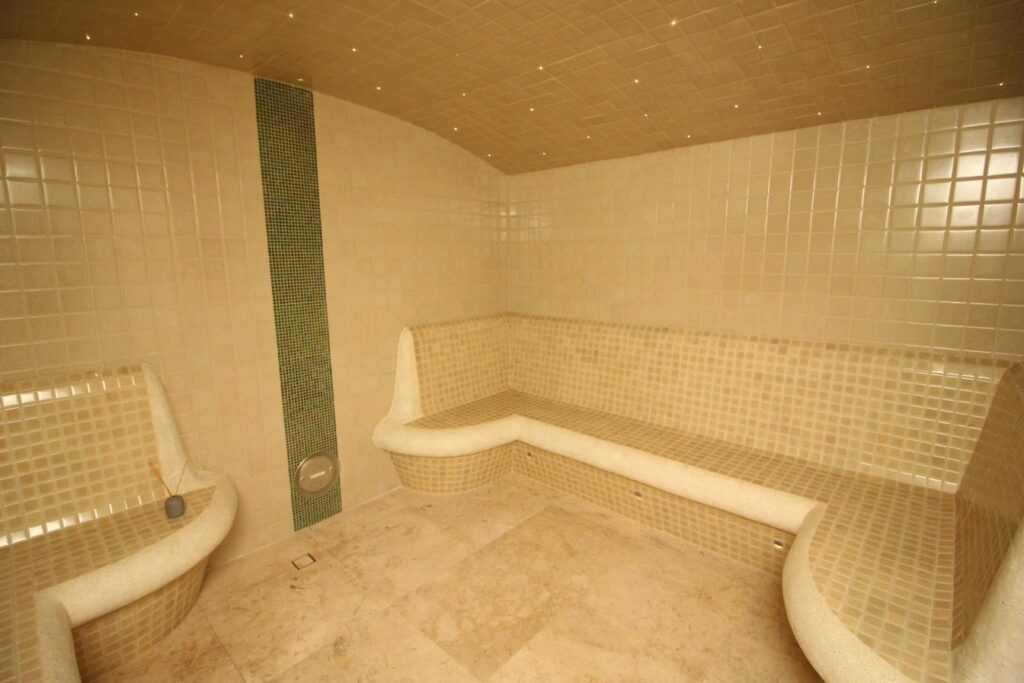
Often confused with saunas or Turkish Baths/Hammams, steam rooms are a completely different beast because they focus on 100% humidity.
- Heat Mechanism: A steam generator boils water and pumps it into the room. Because the moisture is so high, the temperature is kept lower (around 40°C to 50°C) to prevent you from being accidentally poached.
- Environment: Usually finished in tile, stone, or acrylic. If you built this out of wood, it would rot faster than your gym motivation in February.

Smoke Sauna (Savusauna): The Unbeaten Legend
The “ancestor” of the modern sauna. This type doesn’t have a chimney, because why make things easy?
- The Process: A massive pile of rocks is heated by a giant wood fire for several hours. Once the wood has burned down and the smoke is vented out through a small hole in the ceiling, you head in.
- The Experience: It provides a soft, deep heat and a distinct smoky aroma. To many enthusiasts, this is the absolute pinnacle of the sauna world. It’s primal, it’s authentic, and it’s unbeatable.
Wood-Burning vs. Electric
In the world of traditional saunas, your heat source changes the “vibe”:
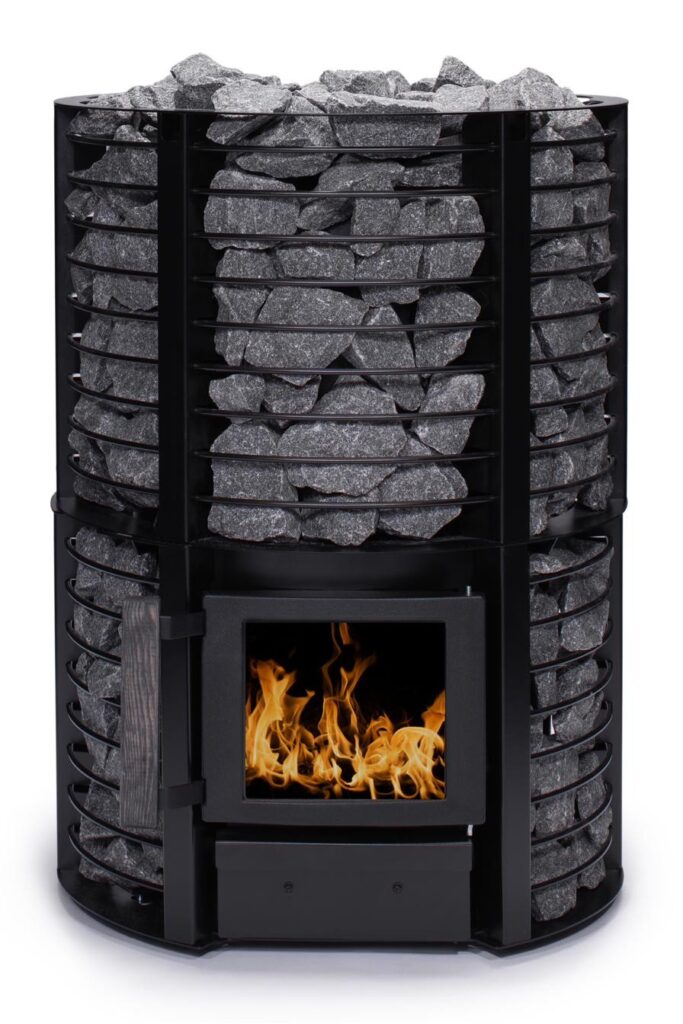
- Wood-Burning: Generally offers a “softer” heat and superior ventilation, as the fire naturally draws fresh air through the stove. Plus, there’s nothing like the sound of crackling wood.
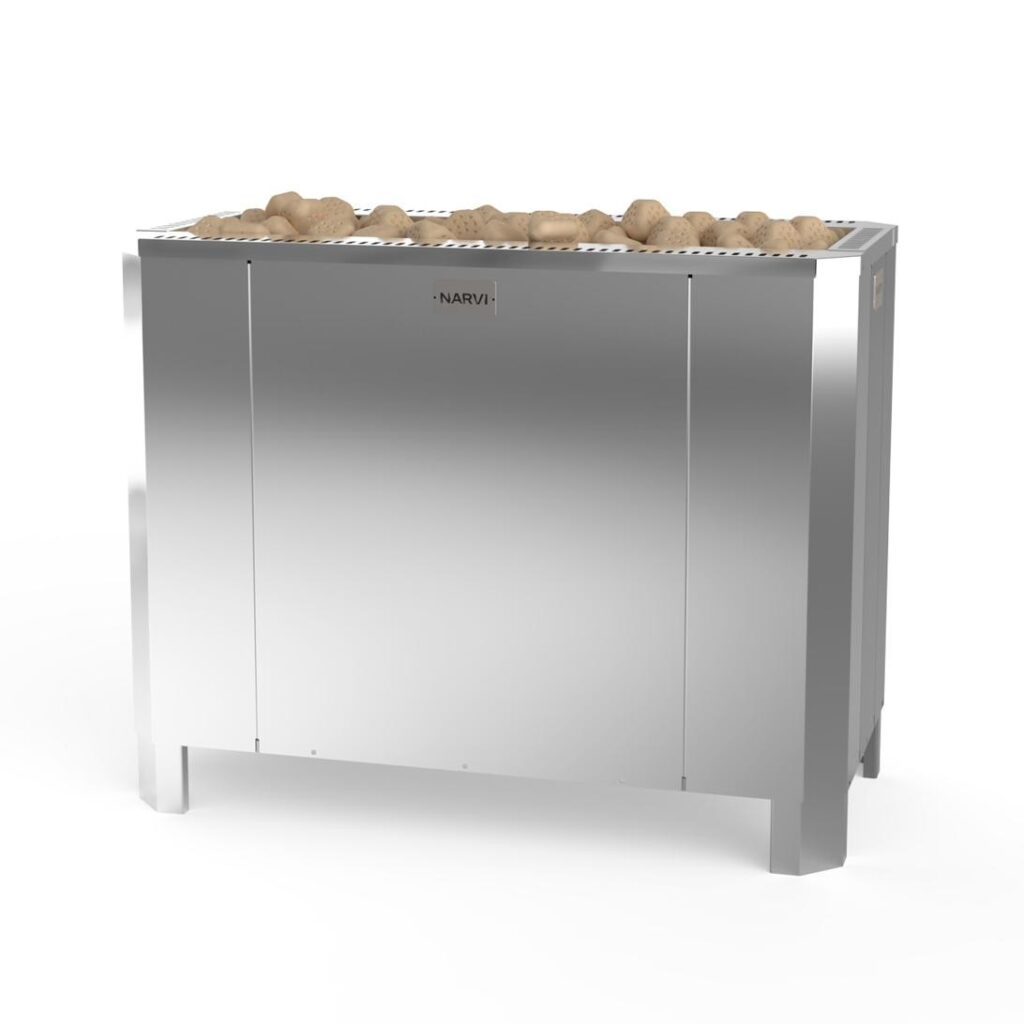
- Electric: The modern choice for convenience and precision. High-end contemporary heaters now use massive stone capacities to mimic that classic wood-burning feel without the need to chop logs.
Comparison at a Glance
| Type | Avg. Temp | Humidity | Primary Material |
|---|---|---|---|
|
Finnish |
70°C – 100°C |
Low (until you add water!) |
Wood |
|
Infrared |
45°C – 60°C |
Ambient |
Wood |
|
Steam Room |
40°C – 50°C |
100% |
Tile / Stone |
|
Smoke |
60°C – 80°C |
Low (until you add water!) |
Wood |
